
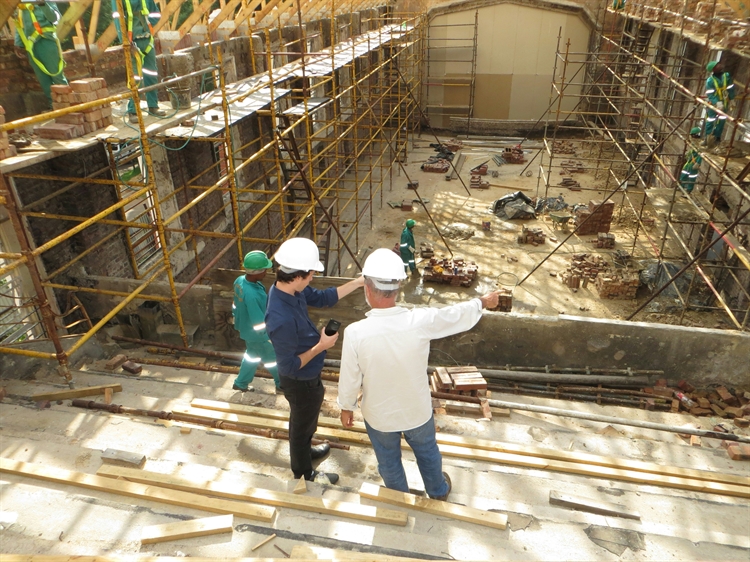
Last year, a team of just twenty employees booked $35 million in construction, nearly double the $18 million booked the year before. While these figures are impressive, the model behind them is what's driving the company's long-term success. Roughly 87% of project costs flow through subcontractors, allowing the company to manage significant volume without carrying a large field workforce. Its team stays focused on the higher-value work: entitlement, estimating, buyout, scheduling, and quality control, with a superintendent overseeing every site. The result is a remarkably lean operation, with total operating overhead equal to just 3.5% of revenue.
The work is commercial, single tenant, and almost entirely new construction. The company's primary clients include national franchises, corporate development groups, and the build-to-suit developers who put up the same buildings for them. Each customer has a prototype, a specification, and a rollout schedule, and by the time the company arrives it has usually built that exact model ten or more times already.
"Our projects run very smoothly because we work with a very professional client group, be it on the corporate side or with a build-to-suit developer." -Owner
That is also why most of the work is negotiated rather than bid, which is unusual in a trade where price normally decides the award. For one of the fastest-growing single-tenant concepts in the country, the company is a preferred builder, and it recently handed over its eighty-eighth store for that brand.
Future growth is not constrained by demand or by capital, but by finding superintendents with twenty years behind them who will relocate for three or four months at a time. The company holds licenses in thirty-two states and works in thirty-five, and most of that map has no crew on it.
Three partners own the business in equal thirds and one is ready to retire. The other two intend to stay, and both say plainly that the next stage of growth is not theirs to fund. The acquirer who would do best here is one that can seat superintendents and defend price at the same time, because the volume machine is already built and already paid for.

